Marble Polishing

Refine a dull marble finish and improve how evenly the surface reflects light.

About the service

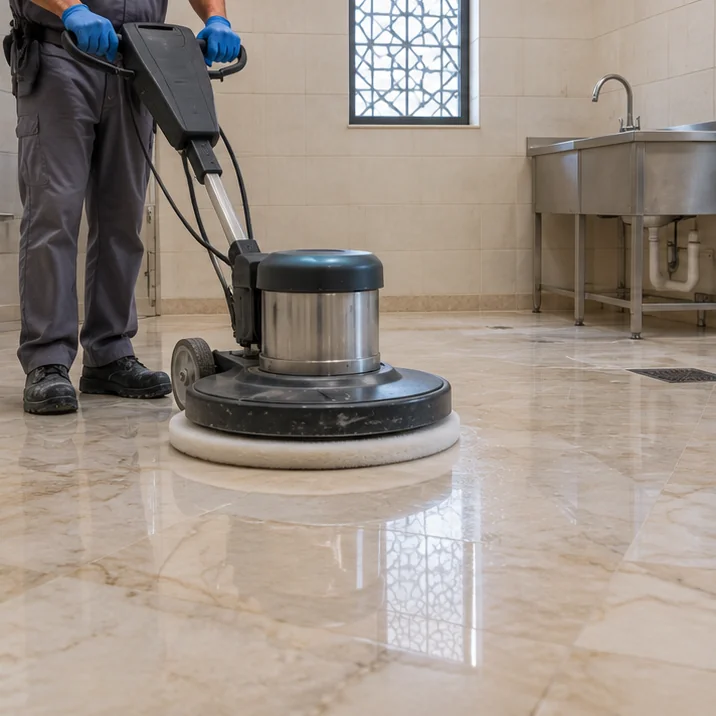
Foot traffic and everyday use can leave marble looking flat or patchy. Polishing addresses the finish of the stone. A photo taken across the surface can help show whether the enquiry is mainly about dullness or also involves scratches, etching or uneven edges.

Where it can help

  • Marble with dull traffic lanes
  • Surfaces with uneven sheen
  • Marble that needs finishing after resurfacing

How to discuss the work

  1. Identify the finish

    Share a photo of the existing marble and describe the level of sheen you want.

  2. Describe visible wear

    Mention scratches, cloudy spots and areas that reflect light differently.

Finish and transitions between rooms

The same marble can look different under a window, under warm lights and in a hallway. Photograph the boundary between the area you want polished and any adjoining section that will stay as it is.

Another service to consider

If the surface is uneven or deeply scratched, compare grinding.

Marble Grinding

What should I look for on a dull floor?

Compare open areas with protected areas under rugs or furniture. A difference in sheen can show where traffic has affected the finish. Also mention rough scratches, uneven joins, or isolated rings, because these can require different work from general dullness.

Describe the finish you want

Photos of a quieter sheen or a stronger reflection can help explain your preference. Include a photo of an adjoining area if the newly polished section needs to blend with it.

What to check before you enquire

Read the reflection in more than one place

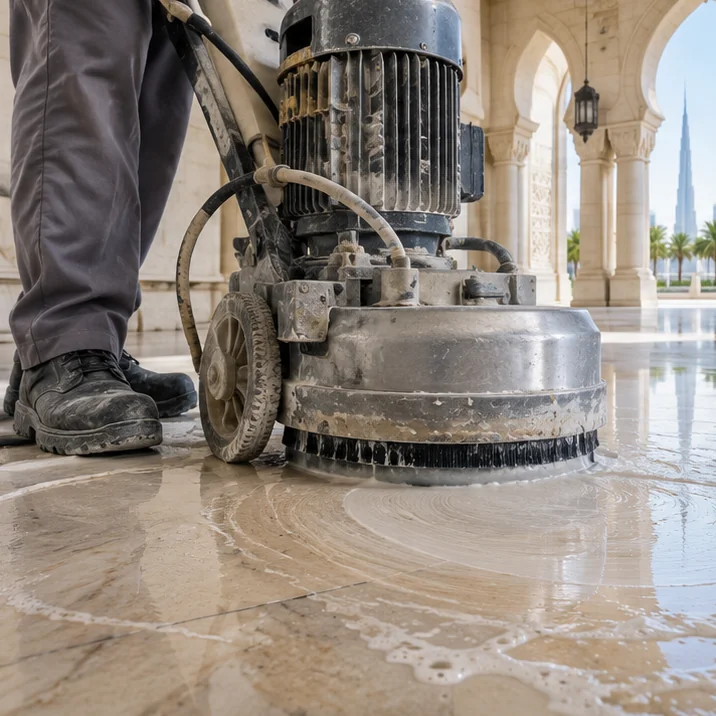
Stand where light from a window or fixture crosses the floor and compare the open area with an edge or a sheltered corner. A broad, soft reflection may show dulled wear, while a small cloudy circle or a scratch can stand out against an otherwise even finish. If you send two views, keep the lighting and angle similar so that the difference is easier to judge.

Choose a finish in context

A brighter surface can reflect more of the room. A softer sheen may be the effect you want next to matte furniture, a patterned inlay, or an adjoining area with a different finish. Describe your preference in terms of the space and show a reference photo if you have one. The marble's existing condition and finish affect what polishing can address.

When polishing may only be part of the work

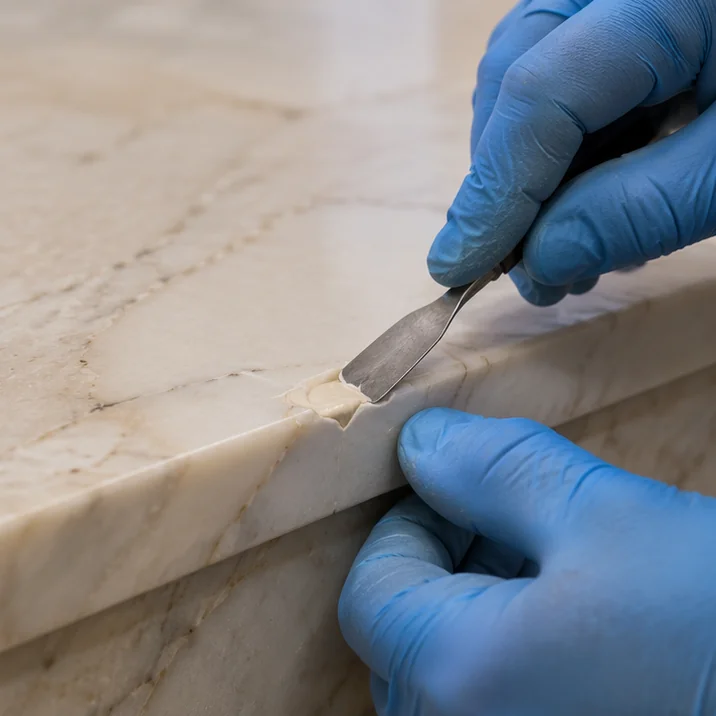
Tell us if the concern includes a raised edge, an open joint, a chipped corner, or a mark you can feel when you run a hand across it. These details help distinguish a change in the surface finish from an issue that might need grinding or restoration. A photo from the doorway is useful for context, but include separate close-ups of deeper or more localized marks.

Map the areas that need to blend

Identify the boundaries of the work, especially if several connected rooms share the same marble. A doorway, inset border, or change in stone color may mark a natural stopping point. Note whether rugs, cabinets, or fixed equipment cover parts of the floor. Tell us whether adjacent stairs, wall panels, or counters need attention and list them as separate surfaces in the same enquiry.

Put the scope into one message

Send a photo of the marble in daylight and describe your preferred finish. Add your area in Dubai and say which part of the work you want to discuss first. You can review the message and attach images in WhatsApp before sending.

Start a marble polishing enquiry
Chat on WhatsApp