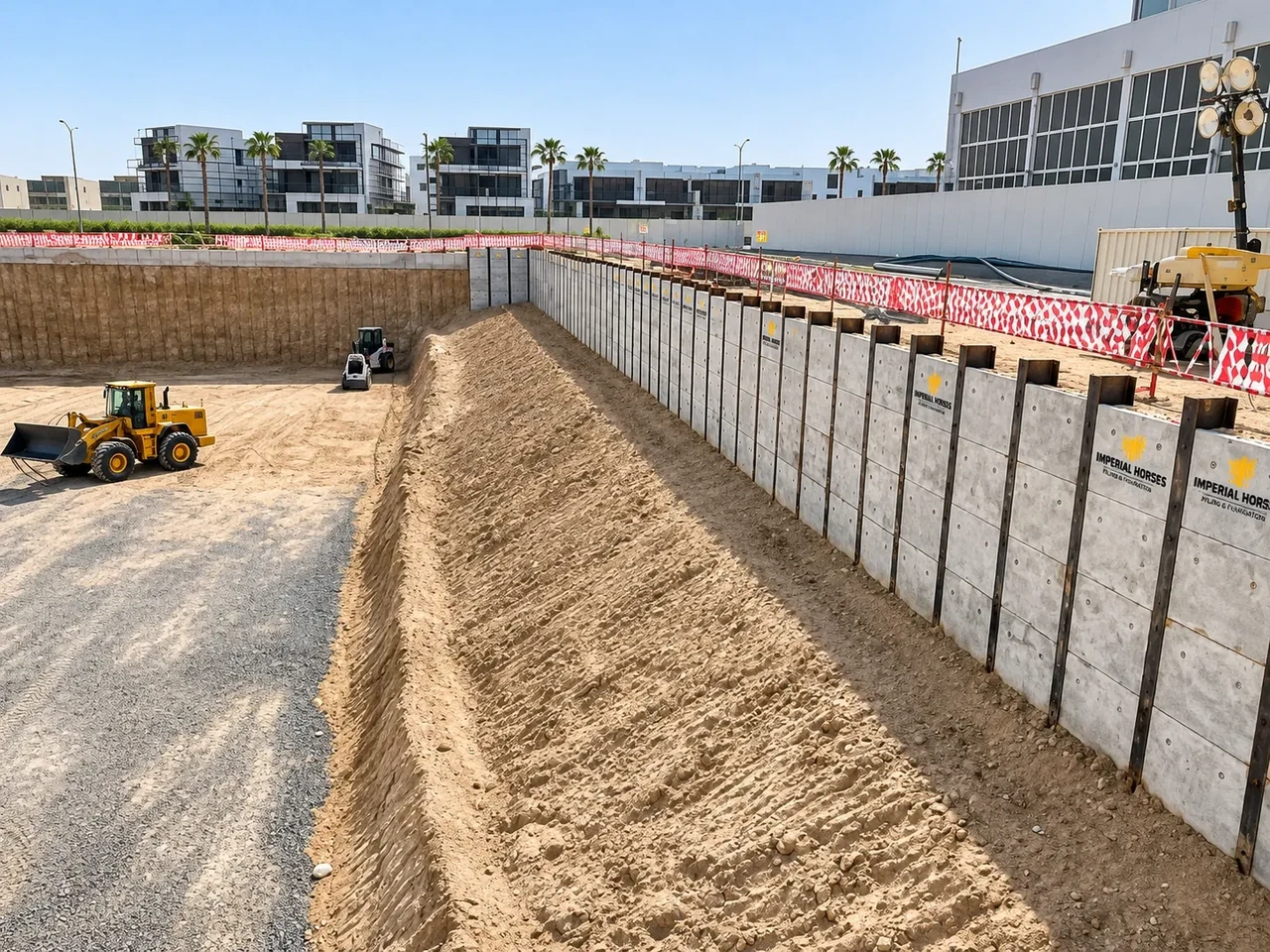
The purpose of excavation support
Shoring helps retain soil around an excavation and limit ground movement. Its design takes into account depth, groundwater, surcharge loads and neighbouring buildings.

Shoring works help retain surrounding ground during excavation. The appropriate system depends on excavation depth, adjacent structures, soil conditions and the engineered project requirements.
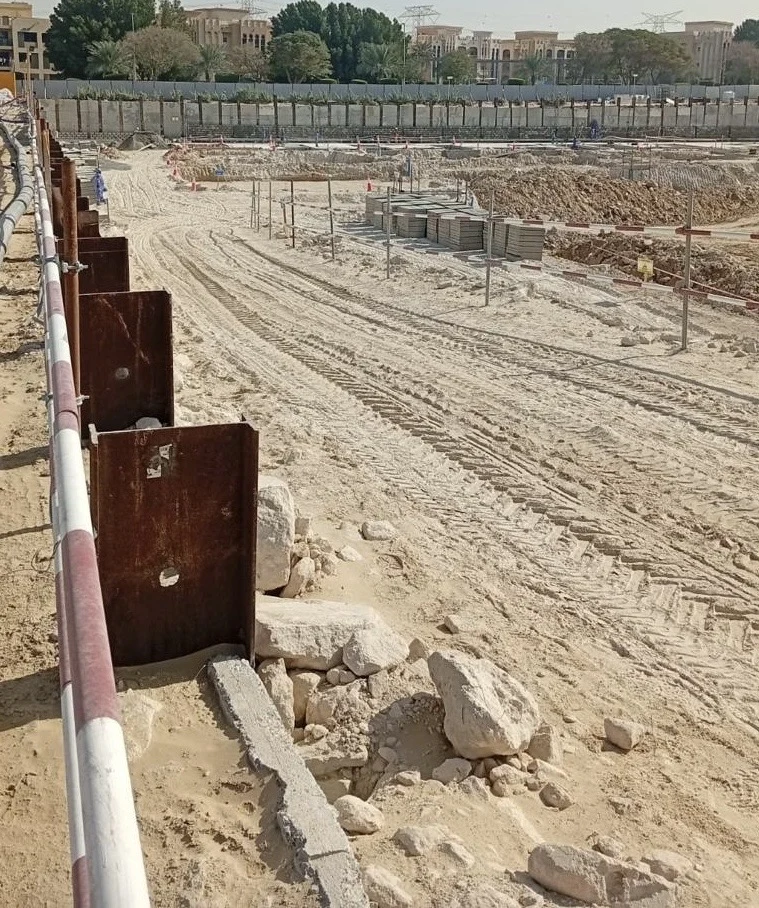
Shoring helps retain soil around an excavation and limit ground movement. Its design takes into account depth, groundwater, surcharge loads and neighbouring buildings.
Common approaches include overlapping pile walls, closely spaced piles and interlocking steel sections. These are engineering reference topics, not an assertion that every system is offered by ROCKMAX.
Send the excavation plan, intended levels, boundary conditions and geotechnical information. Note existing utilities, nearby structures and restrictions on site access.
Explore the relationship between foundation systems, excavation support and the conditions below the surface. These technical illustrations explain common methods; suitability and availability for a ROCKMAX project must be discussed individually.
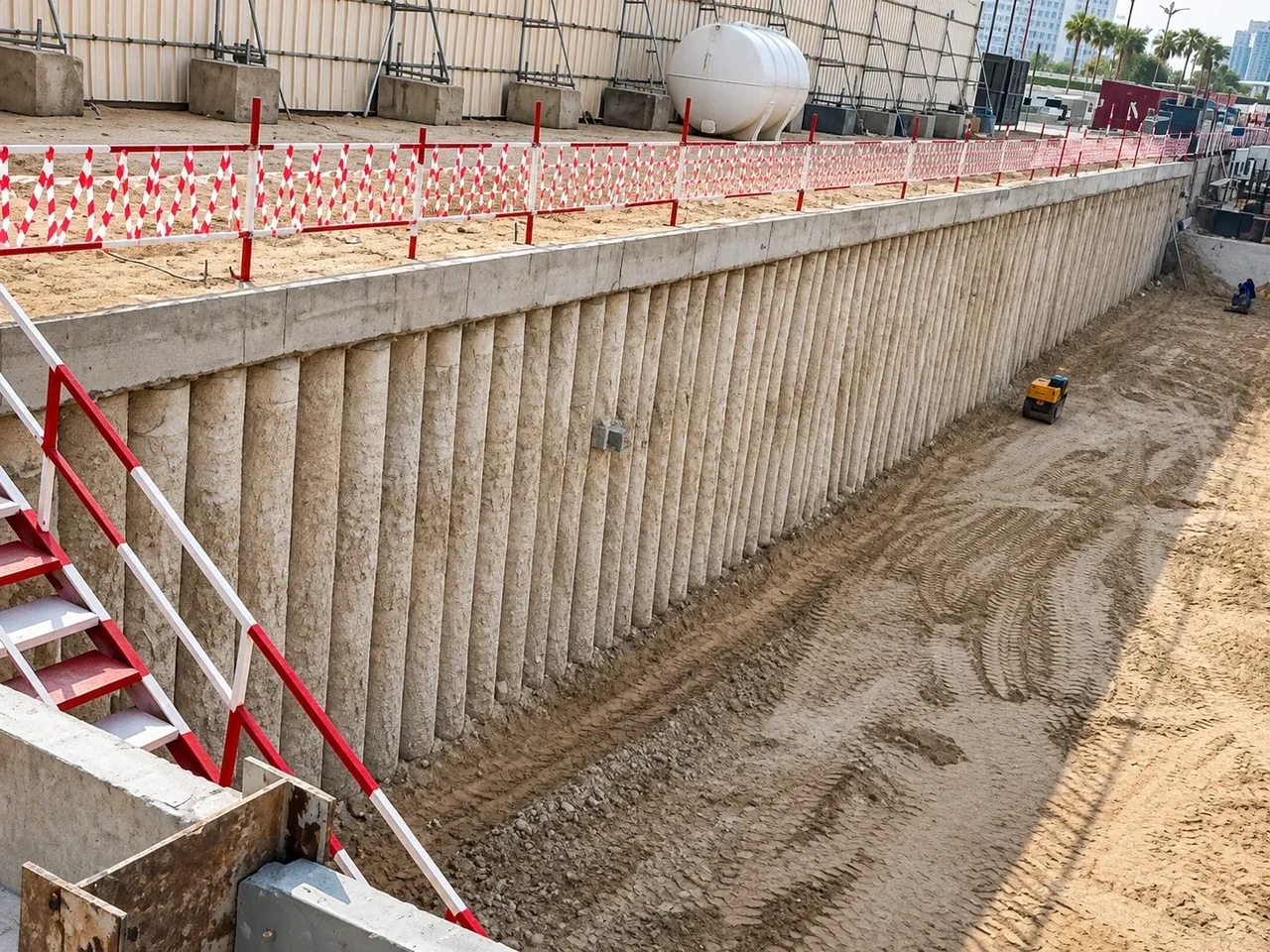
Intersecting concrete piles create a continuous retaining barrier around an excavation. The geometry can also help manage seepage where the system is designed for it.
Explore the method ↗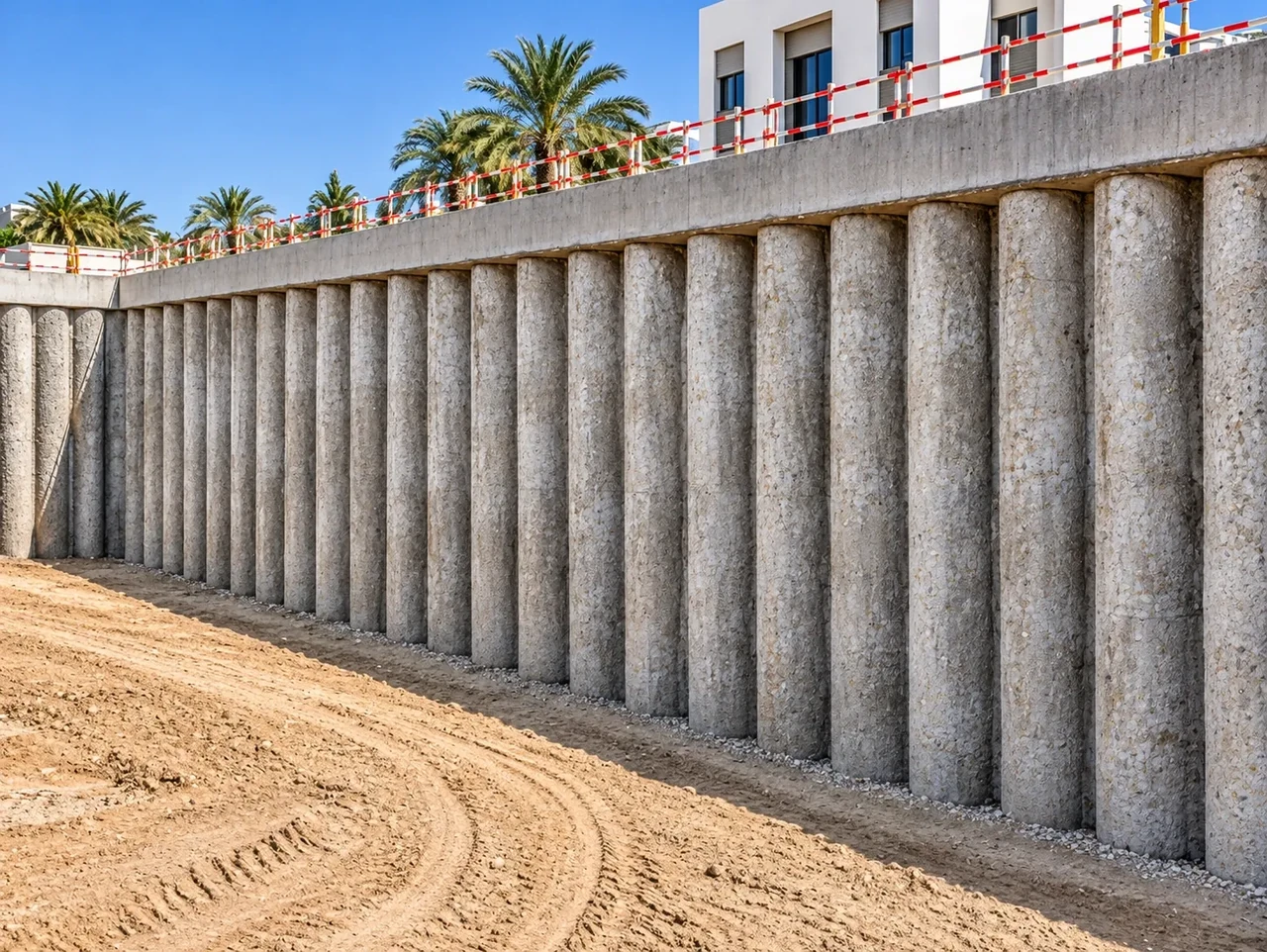
A row of closely spaced piles supports soil along an excavation perimeter. The gaps mean separate groundwater measures may be needed.
Explore the method ↗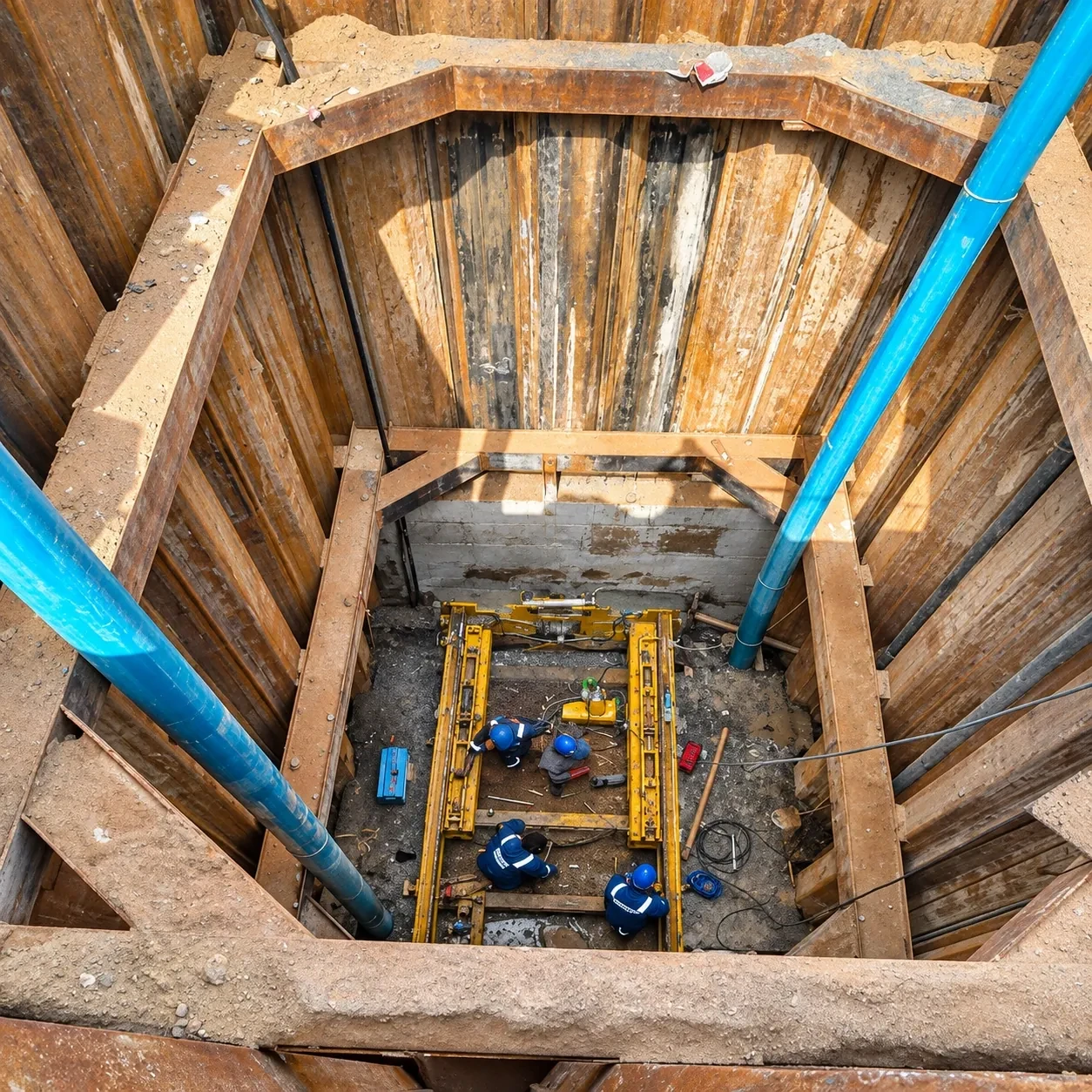
Interlocking steel sections form a retaining wall. The installation technique and support arrangement depend on site and ground constraints.
Explore the method ↗Provide location, drawings and available ground information.
Identify whether the enquiry concerns piling, foundations or shoring.
Discuss project timing and the information needed for a quotation.
An excavation changes the conditions of the surrounding ground. A retaining system is designed to address soil pressure, groundwater effects and movement constraints applicable to the site.
The location of buildings, roads and underground utilities can influence excavation support requirements. Identify the known boundaries and adjacent assets when sharing your project information.
Secant piles, contiguous piles and sheet piles are examples of retaining wall concepts discussed in the engineering guide. Each has different geometric and installation considerations; this does not establish their suitability or availability for a specific project.
Excavation levels, groundwater information, temporary support arrangements and the construction programme may need to be reviewed together by the project team. The required sequence must follow the approved design.