Secant pile walls
The designer considers excavation depth, water conditions, nearby foundations and the support system required at each stage.

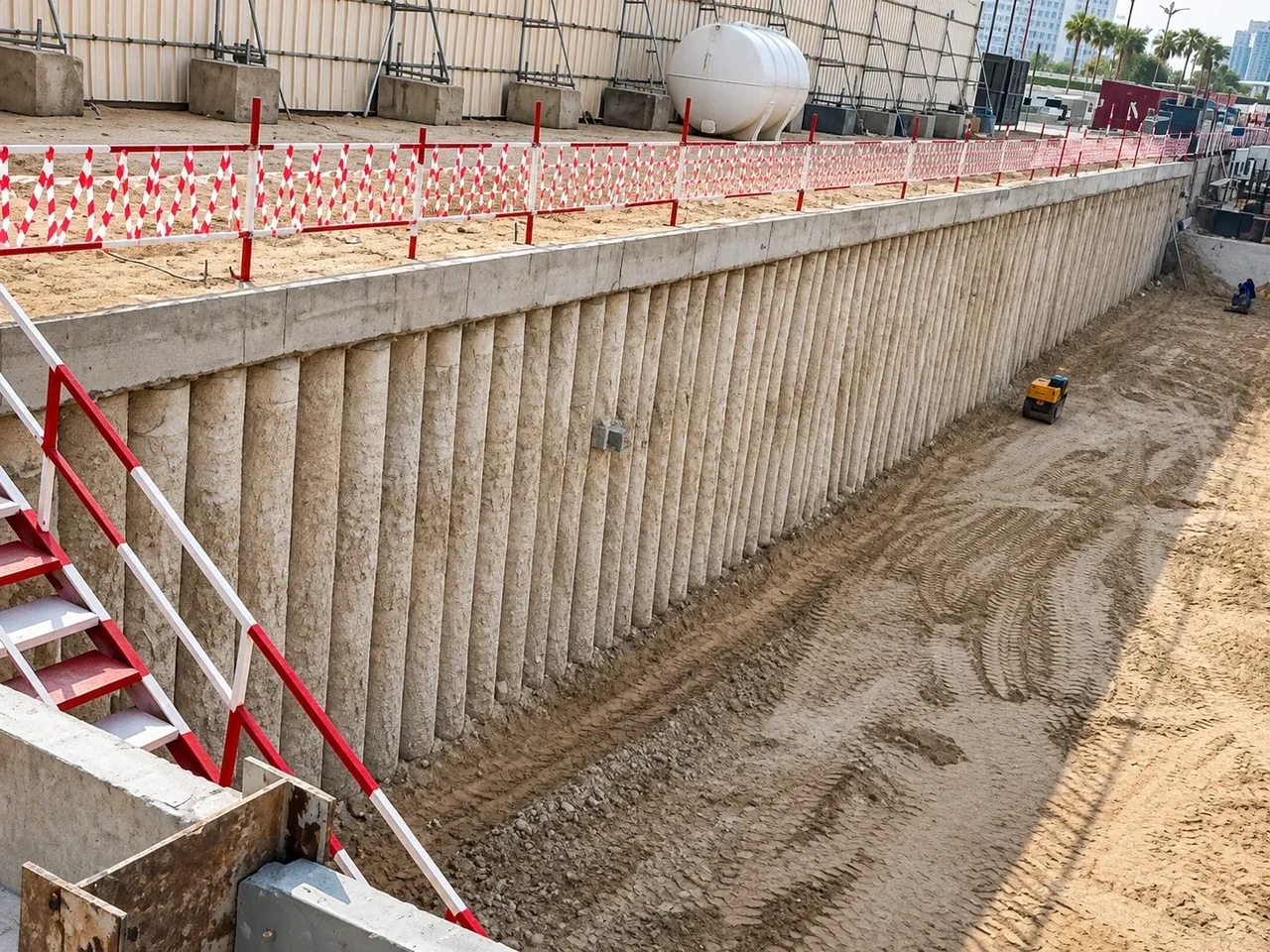
Intersecting concrete piles create a continuous retaining barrier around an excavation. The geometry can also help manage seepage where the system is designed for it.
Explore the relationship between foundation systems, excavation support and the conditions below the surface. These technical illustrations explain common methods; suitability and availability for a ROCKMAX project must be discussed individually.
The designer considers excavation depth, water conditions, nearby foundations and the support system required at each stage.
Secant walls are one possible retaining option; suitability is determined through project-specific engineering.
Soil and groundwater information informs design.
The structure determines the required support.
Adjacent properties and excavation geometry influence retaining needs.
Available working area and restrictions affect planning.
Secant pile walls use an overlapping arrangement of adjacent piles. The wall geometry and reinforcement requirements are determined by the approved design.
A continuous wall may be considered when ground retention and seepage control are relevant, but watertightness must not be assumed. Groundwater conditions and movement requirements are assessed separately.